In this new feature we'll be taking a look at one item from the KHC Collection and looking at its story and why it has a special place in our hearts. We'll change the content every few weeks and archive the previous stories. If you've got a favourite drop us an email and we'll see if we can add its story.
UPDATE - 19th July 2026
You may be wondering why we've suddenly created this new page and why we've focused on the Curse Tablet in particular. Towards the end of June we received a query via our website from Professor Alex Mullen from Nottingham University asking whether we had the Redhill Curse Tablet in our collection. She is planning an exhibition in 2028 and was trying to track down some of the curse tablets from the area. We were delighted to answer that we did indeed have it, and this sparked a number of further interactions. On Friday 17th July we handed over the tablet to Professor Mullen and she has taken it back to the university for imaging and some other tests and it will be back with us in time for our next opening on 26th July.
It's quite exciting for us to find that one of our artefacts is better known outside of Kegworth within the village. We certainly didn't understand the significance of the piece which was "lost, but now has been found". We will be updating this story as it progresses so watch out for more news!
UPDATE - 19th July 2026
You may be wondering why we've suddenly created this new page and why we've focused on the Curse Tablet in particular. Towards the end of June we received a query via our website from Professor Alex Mullen from Nottingham University asking whether we had the Redhill Curse Tablet in our collection. She is planning an exhibition in 2028 and was trying to track down some of the curse tablets from the area. We were delighted to answer that we did indeed have it, and this sparked a number of further interactions. On Friday 17th July we handed over the tablet to Professor Mullen and she has taken it back to the university for imaging and some other tests and it will be back with us in time for our next opening on 26th July.
It's quite exciting for us to find that one of our artefacts is better known outside of Kegworth within the village. We certainly didn't understand the significance of the piece which was "lost, but now has been found". We will be updating this story as it progresses so watch out for more news!
#1 - The Curse Tablet
When Kegworth Heritage Centre reopened in 2024, we were delighted to take responsibility for what is now known as the Robert Williams Collection.
Robert Williams was a local businessman who played an important role in the creation and opening of the original Kegworth Museum. He was also a committed metal detectorist and, over many years, assembled a substantial collection of local finds. Following his death in 2020, Robert bequeathed this collection to Kegworth Heritage Centre.
The Robert Williams Collection contains around 200 objects, including Roman and medieval coins, items of jewellery, and other archaeological finds. Among the most significant of these is the Red Hill / Ratcliffe-on-Soar curse tablet.
The tablet was discovered in 1990 at the Romano-British site of Red Hill, near Ratcliffe-on-Soar, while Robert was out walking. Red Hill lies close to the meeting point of the rivers Soar and Trent and is understood to have been the site of a Roman temple, possibly associated with a wider settlement.
The curse tablet is made of lead and bears an inscription in Latin. The text appears to relate to the theft of a mule and other agricultural or stable-related items. Two individuals, Camulorix and Titocuna, are named in the inscription.
Use the arrows to move between the images or click on the dots to move to a different image… or just sit back and enjoy the show!
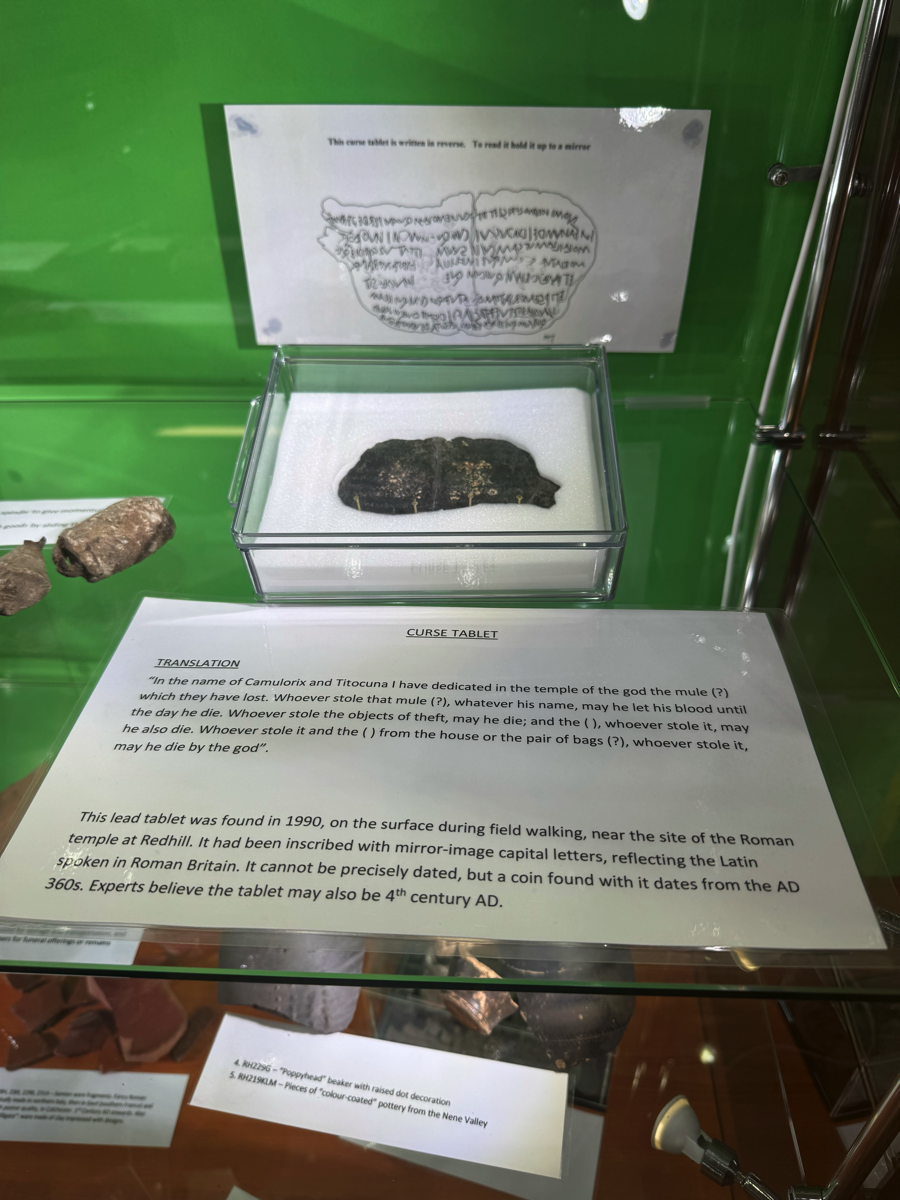
The Curse Tablet in situ at KHC in the Williams Cabinet
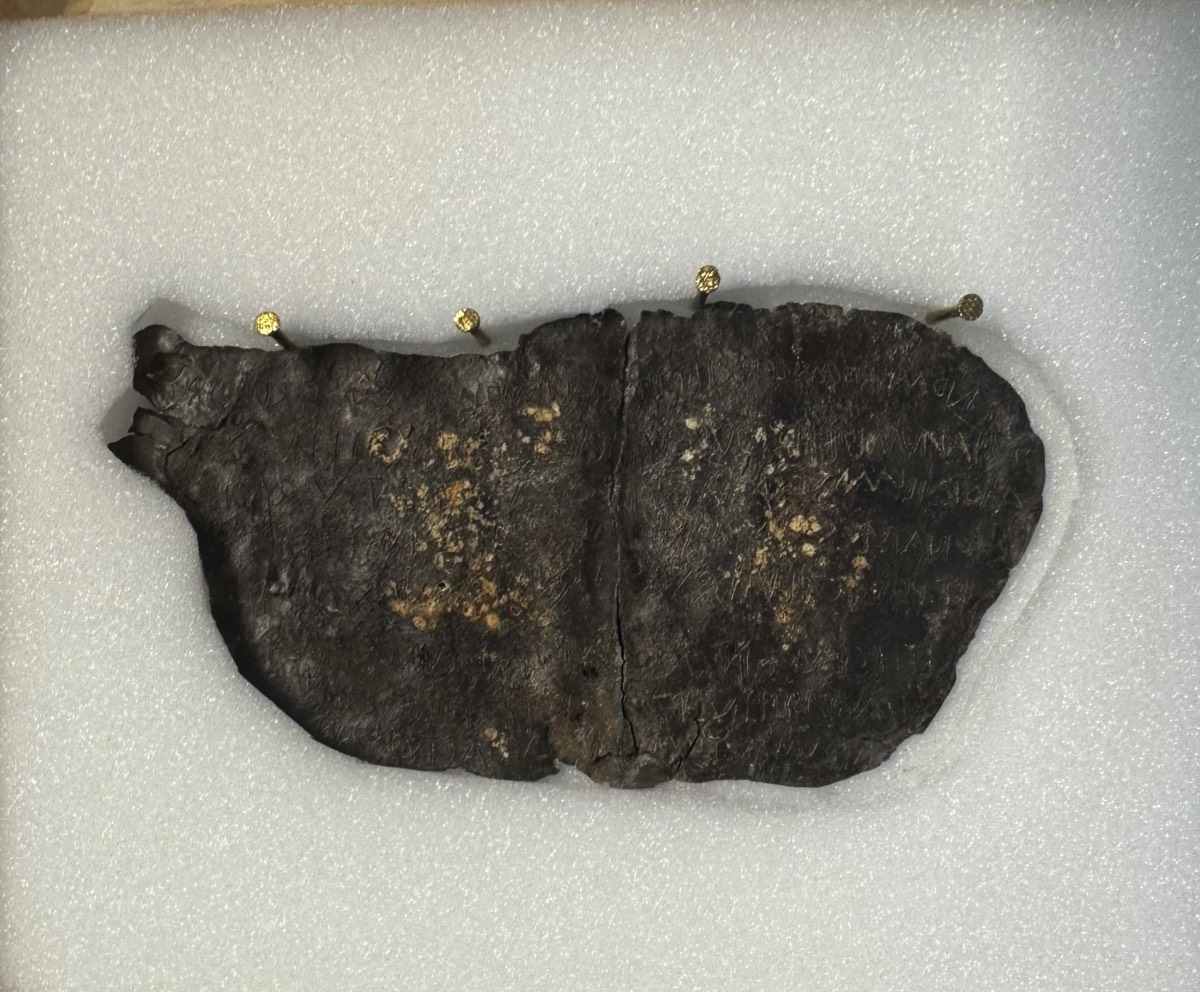
The Redhill Curse Tablet
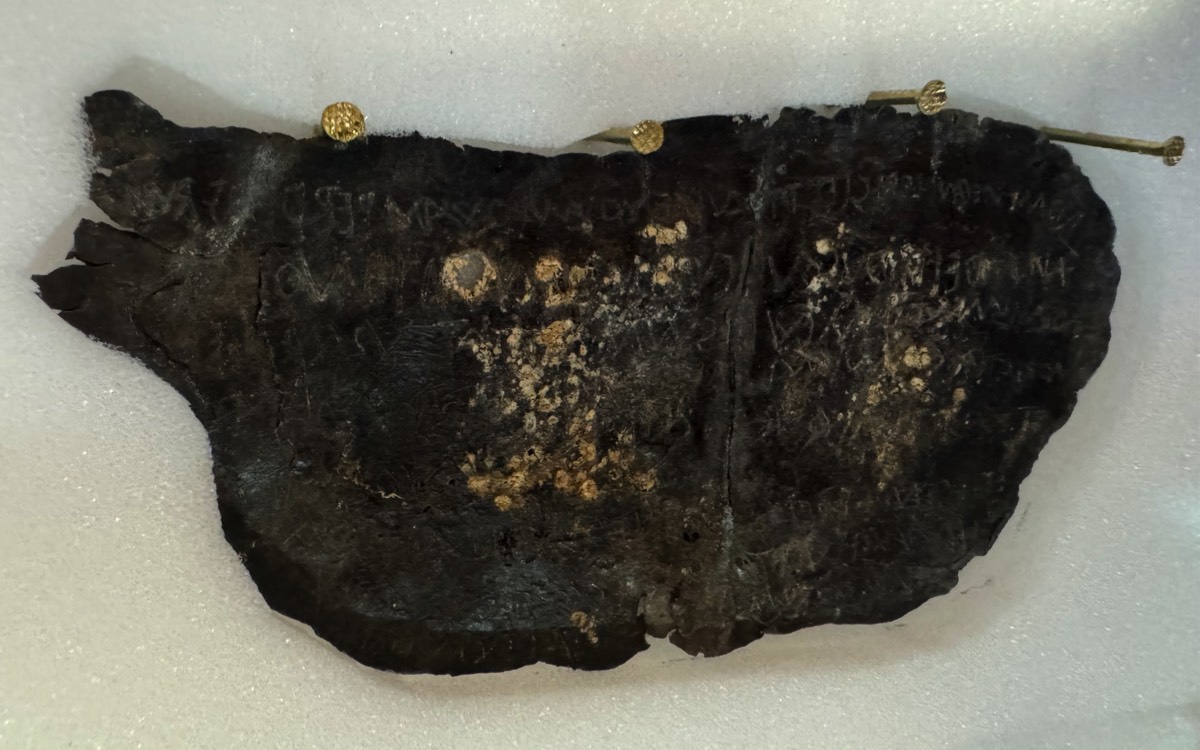
The Redhill Curse Tablet
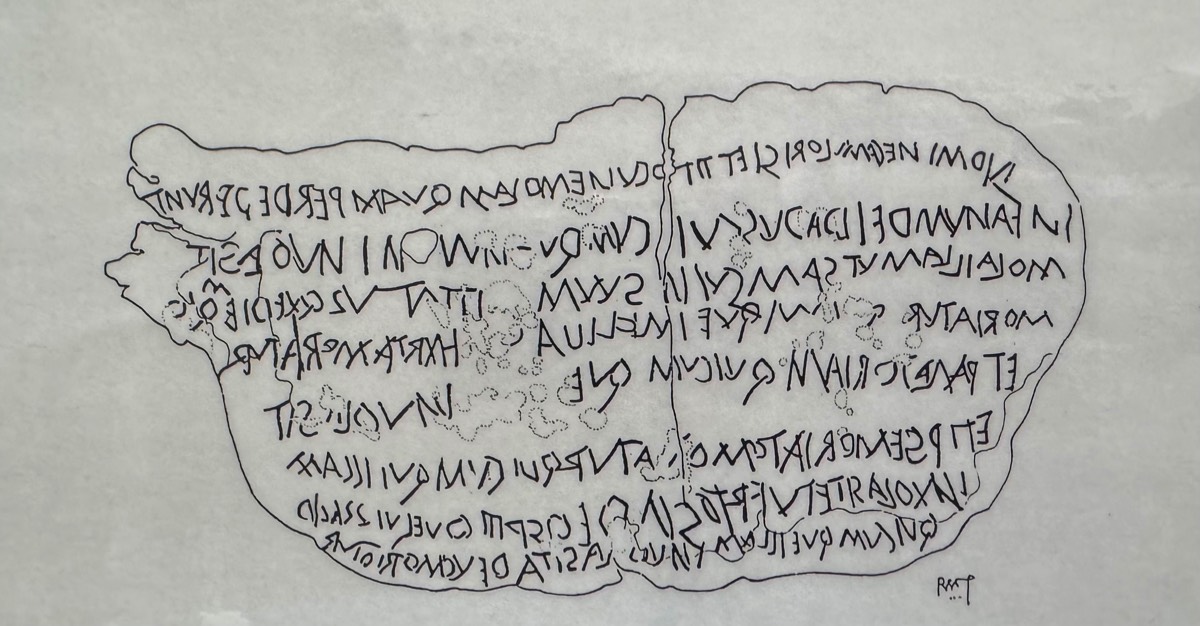
The Redhill Curse Tablet - original Latin mirror image
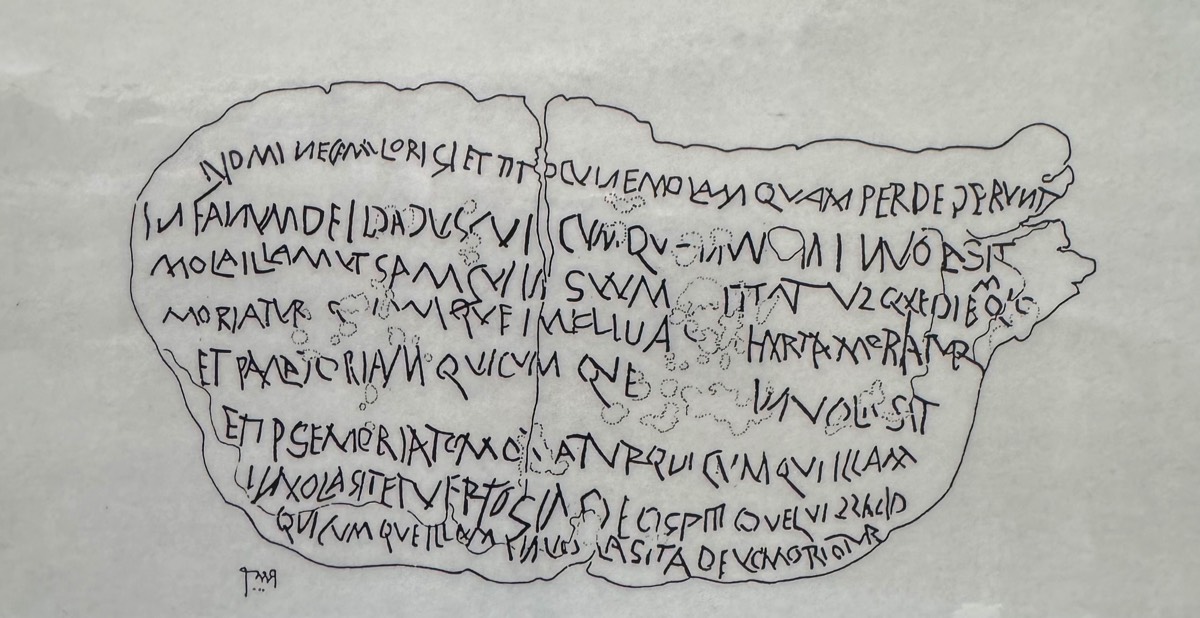
The Redhill Curse Tablet - the reflected Latin
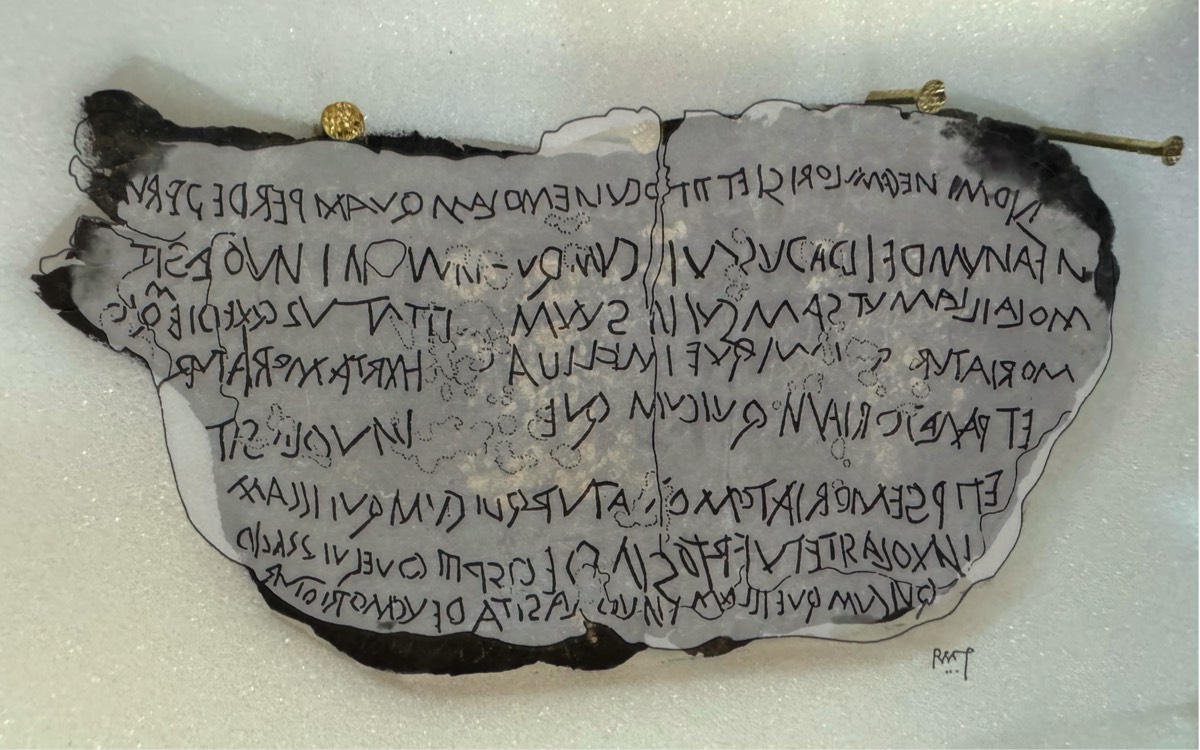
The Redhill Curse Tablet - crude overlay

Professor Mullens signing the loan agreement (July 2026)
In broad terms, the curse calls upon the god of the temple to punish whoever was responsible for the theft. It asks that the thief, whatever their name, should suffer and die for the offence. Although parts of the inscription are unclear, its meaning is unmistakably forceful: the stolen property is placed under divine protection, and severe consequences are invoked against the culprit.
The inscription was written in mirror-image capital letters and reflects the Latin used in Roman Britain. The tablet cannot be dated with certainty, but a coin found with it dates from the 360s AD, suggesting that the tablet may also belong to the fourth century.
Several academic papers have been published on the Red Hill tablet.* It is one of four known curse tablets from the site; the other three were found in 1963 and are now held by the University of Nottingham Museum. For some time, the location of the Red Hill / Ratcliffe-on-Soar tablet was unclear. Its arrival at Kegworth Heritage Centre gives us an important opportunity to clarify its history, recognise its connection with Robert Williams, and ensure that this remarkable object is properly recorded and understood.
* Published papers include:
Hassall, M. W. C. and Tomlin, R. S. O. 1993. ‘Roman Britain in 1992. II. Inscriptions’, Britannia 24, pp. 310–322, plates XV–XVI.
Mullen, A. 2013. ‘New thoughts on British Latin: a curse tablet from Red Hill, Ratcliffe-onSoar (Nottinghamshire)’, ZPE 187, pp. 266–272.
Tomlin, R. S. O. 2004. ‘A Roman inscribed tablet from Red Hill, Ratcliffe-on-Soar (Nottinghamshire)’, The Antiquaries Journal 84, pp. 346–352.